We earn a commission if you buy through our links, at no extra cost to you.
Best Portable Air Conditioner for a Bedroom (2026)
How to pick a portable AC for a bedroom: sizing by DOE SACC and sq ft, published noise figures, inverter vs fixed speed, drainage and three models that fit.
At a glance
For a bedroom, size by the DOE SACC rating and compare the quietest published noise figure. The Midea Duo 14K with Heat lists as low as 42 dBA for large rooms, the Dreo 740S lists 42 dBA with a drain-free design, and the Whynter NEX ARC-1280MX adds an inverter and app control.
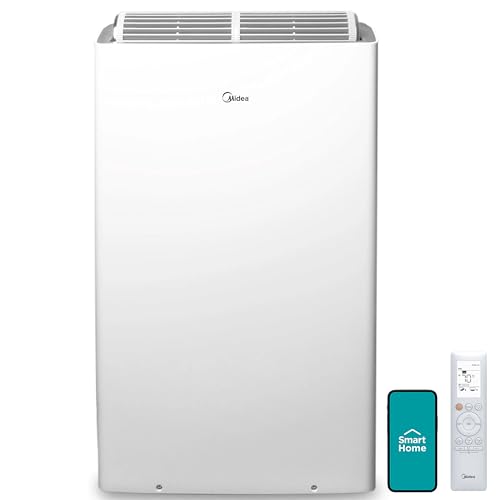
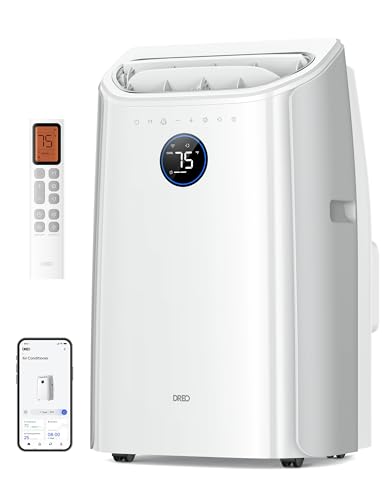
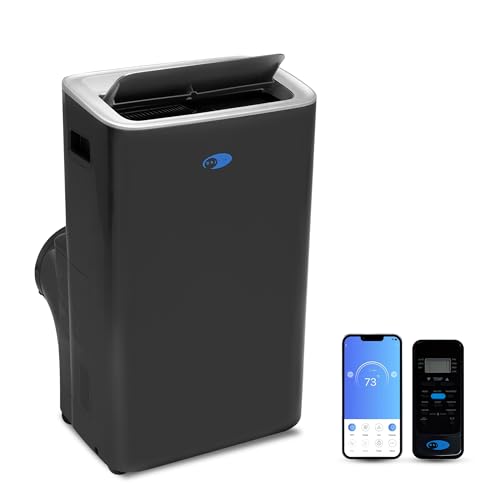
The best portable air conditioner for a bedroom is one that is sized to the room by its DOE (SACC) rating, vents hot air outdoors through a window kit that actually fits your window, and publishes a noise figure you can live with at night. For a typical small to mid-size bedroom, that usually means a lower-capacity unit. For a large primary bedroom or a bedroom with a lot of sun, three models on this site stand out: the Midea Duo 14K with Heat, the Dreo 740S and the Whynter NEX ARC-1280MX. Smaller bedrooms and dorms are better served by the 6,000 and 5,000 BTU Midea units covered further down. We did not run any of these units ourselves. Everything below comes from the makers’ own pages, manuals and FAQs.
If you want the full lineup instead of a bedroom shortlist, see our ranking of the best portable air conditioners for 2026.
Start With Square Footage and the Right BTU Number
Portable air conditioners carry two BTU figures. The older ASHRAE number looks generous because it does not fully count the heat a portable adds to the room or the warm air that leaks back in around the hose. The SACC figure, short for Seasonally Adjusted Cooling Capacity, comes from the Department of Energy’s test procedure (10 CFR 430, Subpart B, Appendix CC) and accounts for those losses. Whynter’s FAQ gives the standard illustration: a unit rated 14,000 BTU on the old basis may have a SACC of only 8,500 to 10,000 BTU, which it calls “not weaker, just more accurately labeled.” Whynter also says a dual-hose design generally earns a higher SACC for the same ASHRAE rating.
So when you shop, size the room against the DOE or SACC number. Here is how the makers describe their own coverage:
- Midea 5,000 BTU (DOE): up to 150 sq ft.
- Midea 6,000 BTU (DOE): 150 to 250 sq ft.
- Dreo 740S: 10,000 BTU DOE, up to 400 sq ft.
- Whynter NEX ARC-1280MX: 10,000 BTU SACC, up to 500 sq ft.
- Midea Duo: 12,000 BTU DOE, up to 550 sq ft.
Whynter’s own sizing guide, which it labels as reference only, points rooms up to 300 sq ft to 8,000 to 10,000 BTU and 300 to 500 sq ft to 11,000 to 14,000 BTU, and tells you to consider ceiling height, sun exposure and heat from appliances. Treat every maker’s square footage as a ceiling for a shaded, well-insulated room. A west-facing bedroom under a roof, or one with a computer and a TV running, deserves more margin than the label suggests.
A bigger unit is not automatically better for sleeping. A model far larger than the room costs you weight, hose length and, often, noise, with no benefit once the room is at temperature. Measure your room, pick the DOE number that clears it with some margin, and move on.
Quiet: Use Only Published Noise Figures
Noise is the number one bedroom concern, and it is also the number most shoppers cannot verify. Here is what the makers actually publish:
- Midea Duo: “as low as 42 dBA,” per Midea’s product page. That is the quietest setting, not a figure for every mode.
- Dreo 740S: a lowest noise level of 42 dBA, per Dreo’s specification table. Dreo does not publish figures for higher fan speeds.
- Whynter NEX ARC-1280MX: 50/53/56 dBA in Whynter’s spec table, without saying which speed each number belongs to.
- Whynter ARC-14S: below 51 dBA on low and below 56 dBA on high.
- Dreo AC515S: 46 dB, per Dreo’s product page.
Whynter’s FAQ says most portable units run between 50 and 60 dB, similar to a conversation or a fan, and that sound varies with fan speed and compressor activity. So a published 42 dBA is a best case. When a unit is cooling a hot room hard, expect more sound than the headline number.
Inverter or Fixed Speed?
A fixed-speed compressor runs at full output until the room reaches the set temperature, shuts off, then restarts when the room drifts back up. Those on-off cycles are the sound many light sleepers notice. An inverter compressor slows down as the room approaches the set point and holds it with smaller swings, which tends to mean fewer loud cycles overnight. All three hero models below use an inverter. The Whynter ARC-14S, covered in our profile of the ARC-14S, is the brand’s fixed-speed dual-hose option, with a published 51 to 56 dBA range.
Sleep Mode and Timers
Sleep modes vary by brand, so check what yours does. Midea’s manual describes a sleep mode that raises the cooling setpoint 2 degrees F after 30 minutes and again after another 30 minutes, then holds it. Dreo lists cool, dry, fan and sleep modes plus a 24-hour timer in the app and a 12-hour timer on the panel. Whynter lists sleep mode, a 24-hour timer and auto-restart on the NEX. Auto-restart matters in a bedroom because it brings the unit back after a power blip.
Drainage: Avoid the Midnight Tank Run
Portable air conditioners remove moisture as they cool. Most handle it by evaporating it out through the exhaust, but in humid weather the water can outpace evaporation. Each brand deals with it differently:
- Dreo 740S: Dreo’s spec says drainage-free in environments below 90 percent humidity, with a drain hose in the box. A P1 code means the tray is full: turn the unit off, drain it and restart.
- Whynter NEX: self-evaporation, plus a lower drain port and an upper gravity drain port for continuous operation. A hose on the upper port must run downhill and not kink.
- Midea Duo: a bottom tray that triggers a P1 code when full, drain ports for dry, heat and excess condensate, and a condensate pump so the drain hose can be raised up to 6 ft.
If your bedroom stays humid, plan a drain hose route to a floor drain or a spot where a pan will not get kicked in the dark.
Windows and Venting
Every real portable air conditioner must vent hot air outdoors. Whynter’s kit works in vertical (sliding) and horizontal (sash) windows, and Midea’s manual shows separate steps for hung and sliding windows. Casement windows need an aftermarket kit or a custom insert, per both Whynter and Midea. Dreo lists window heights from 20 to 53 inches for the 740S, and Whynter says the NEX kit extends up to 82 inches. Measure before you order, and seal the gaps around the panels, because most cooling complaints on any portable come from leaks at the window or the hose connection, not the compressor.
Never vent the hose into another room, a garage or an attic. Whynter’s FAQ says the exhaust carries heat and moisture, which pushes heat back into your home and risks condensation and mold in the receiving space. Keep the hose short and straight: Whynter does not recommend extending its hoses and says not to exceed 9 feet in total if you must.
Outlets: Plug Directly Into the Wall
Plug the unit directly into a properly grounded wall outlet. Midea’s manual says not to use an extension cord or an adaptor plug, and Whynter says the same, ideally on a dedicated circuit, with no lightweight cords, adapters or undersized power strips. If your bedroom has no suitable outlet, have a licensed electrician add one, and have a licensed contractor handle any permanent wall vent. We do not give steps for either job. For Dreo, follow the power instructions in its manual.
Midea Duo 14K with Heat: The Pick for a Large Bedroom
A large primary bedroom or loft with the quietest published figure here: as low as 42 dBA, an inverter, a hose-in-hose design and a heat mode for mild weather.
Midea lists 12,000 BTU on the DOE basis for spaces up to 550 sq ft, which is more than most bedrooms need. It earns a place here because of the combination of a variable-speed inverter, the 42 dBA best-case figure, a sleep mode and one hose assembly instead of two. It is also a heat pump with a 41 to 86 degrees F heating range, though in heat mode the manual says you must attach the included drain hose. At 77.16 lbs it is heavy, and the manual says to keep objects at least 20 inches from the hose inlet and outlet. Read the details in our Midea Duo profile.
Dreo 740S: A Dual-Hose Inverter With a Drain-Free Design
A dual-hose inverter rated 10,000 BTU DOE for up to 400 sq ft, with a 42 dBA lowest noise level, app and voice control, and a drain-free design below 90 percent humidity.
The 740S fits a big bedroom or a bedroom with a lot of sun. It ships with two 5 ft hoses, so the unit needs to sit close to the window, and the window kit fits heights from 20 to 53 inches. It has no heat mode, and Dreo does not list a weight, which matters if you carry it upstairs. Dreo covers it for 12 months. See the Dreo 740S profile for drainage and setup notes.
Whynter NEX ARC-1280MX: Inverter Cooling With Whynter’s Compressor Warranty
A dual-hose inverter rated 10,000 BTU SACC for up to 500 sq ft, with app and voice control, a 24-hour timer and a three-year compressor warranty.
At 55 lbs net, Whynter’s NEX is lighter than the Midea Duo. It has both lower and upper drain ports, a 3-piece window kit that extends to 82 inches and control through Alexa, Google Home and Apple Siri. Its 50 to 56 dBA noise range is not whisper quiet, so if bedroom silence is your top priority, compare the figures above first. Its warranty is one year on the unit and three on the compressor. More in the Whynter NEX ARC-1280MX profile.
Small Bedrooms and Dorms: Step Down in Size
If your room is closer to 150 square feet, you do not need any of the three units above. Midea’s 6,000 BTU DOE model is rated for 150 to 250 sq ft, and its 5,000 BTU DOE model for spaces up to 150 sq ft. Read the Midea 6,000 BTU Smart profile and the Midea 5,000 BTU profile, then see our ranking of the best small portable air conditioners. If you live in a dorm, check your housing office’s appliance rules first. We do not know your school’s policy.
Quick Decision Guide
- Large or sunny bedroom, want the lowest published noise figure and a heat mode: Midea Duo 14K with Heat.
- Big bedroom, want app control and a drain hose in the box: Dreo 740S.
- Bedroom up to 500 sq ft, want a long compressor warranty: Whynter NEX ARC-1280MX.
- Small bedroom or dorm: the Midea 6,000 BTU or 5,000 BTU models.
Before You Buy
Measure your window and your room. Check that the outlet is grounded and not shared with a space heater or a microwave. Decide where the drain water will go. And keep the hose short, straight and outdoors-facing. For how all ten models compare, return to the main portable air conditioner ranking.
Sources
- Midea Duo 12,000 BTU DOE portable air conditioner with heat official product page
- Midea MAP14 portable air conditioner user manual (PDF)
- Dreo Portable Air Conditioner 740S official product page
- Dreo Smart Air Conditioner 515S official product page
- Whynter ARC-1280MX official product page
- Whynter ARC-14S official product page (FAQ on SACC, venting and outlets)
- U.S. Department of Energy: Portable Air Conditioners
Frequently asked questions
What size portable air conditioner do I need for a bedroom?
Match the DOE (SACC) BTU figure to your square footage, not the bigger ASHRAE number. Whynter's sizing guide, which it labels reference only, points rooms up to 300 sq ft to 8,000 to 10,000 BTU and 300 to 500 sq ft to 11,000 to 14,000 BTU, and says to factor in ceiling height, sun exposure and appliance heat. Makers also publish their own coverage: Midea lists 150 to 250 sq ft for its 6,000 BTU DOE model and up to 150 sq ft for its 5,000 BTU DOE model.
How quiet is a portable air conditioner for sleeping?
Only the maker's published figures are reliable, and they are usually a best case. Midea lists the Duo at as low as 42 dBA, Dreo lists the 740S at a lowest level of 42 dBA, and Whynter lists the NEX ARC-1280MX at 50/53/56 dBA. Whynter's FAQ says most portable units run between 50 and 60 dB. Expect more sound when a unit is cooling hard.
Do I have to empty a tank in the middle of the night?
It depends on the model and your humidity. Dreo says the 740S is drainage-free below 90 percent humidity and ships with a drain hose. Whynter's NEX uses self-evaporation and has an upper gravity drain port for continuous draining. Midea's Duo has a condensate pump and a bottom tray that triggers a P1 code when full. In very humid weather any of them can fill, so plan a drain hose route before you buy.
Can a portable air conditioner work in a casement window?
Yes, but not with the standard slider kit. Whynter's FAQ says casement windows work with an aftermarket kit or a custom insert, and Midea's manual describes kits for hung and sliding windows. Measure the opening and check the kit's range before you order.
Can I use an extension cord for a bedroom air conditioner?
No. Midea's manual says not to use an extension cord or an adaptor plug, and Whynter says to plug directly into a properly grounded wall outlet, ideally on a dedicated circuit, with no lightweight extension cords, adapters or undersized power strips. If no suitable outlet is nearby, Whynter says to consult a licensed electrician. For Dreo, follow the power instructions in its manual.
Is a single-hose or dual-hose unit better for a bedroom?
Dual-hose units cool faster and help maintain room pressure, according to Whynter's FAQ, and generally earn a higher SACC for the same ASHRAE rating. Single-hose units are simpler and, per Whynter, less efficient in large or sunny rooms. For a modest shaded bedroom with the door closed, the gap is smaller.